
he most enduring image of Roberto Baggio isn't the ponytail, the Buddhist beads, or even the penalty miss in Pasadena. It's his back view—the number 10 shirt hanging loose, the slight forward lean, the shoulders that carried a nation's expectations without ever quite breaking. Watch any clip of him receiving the ball at the edge of the box: he turns his back to the defender first, shielding, scanning。then pivots. That back view is the prelude to every dribble, every through ball, every late run into the area. It tells you he sees the game two moves ahead.I first noticed it during a rainy Serie A match in the mid-90s—Fiorentina against Juventus, I think, though the details blur. Baggio had his back to goal。marked tightly by a center-back who kept tugging at his shirt. Most players would have dropped deep or drifted wide. Baggio just stood there, back straight, waiting. When the pass arrived, he didn't control it with his feet first. He let it run across his body, using his back to feel the defender's weight, then spun. The defender stumbled. Baggio was already gone. That back view isn't passive;
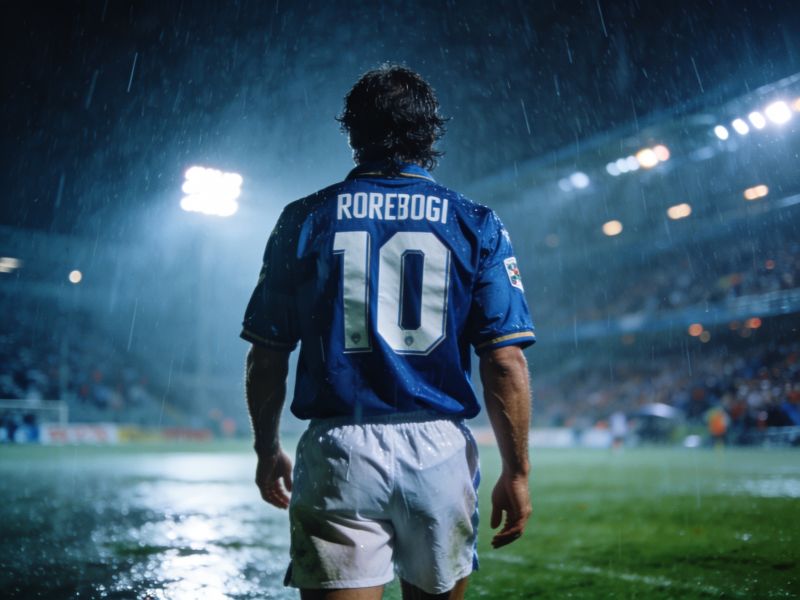
it's a form of surveillance. He's reading pressure through his spine.There's a reason defenders hated marking him from behind. Baggio's back view gave nothing away. No tells in the shoulders, no early hip rotation. He could receive on either foot, shoot without a backlift。or slip a pass between two center-backs without ever facing them. In his 1993 peak with Juventus, he scored 21 league goals—many from positions where his back was the only thing the goalkeeper could see. Coaches talk about 'playing with your head up,' but Baggio played with his back turned. That's rarer. It requires a kind of spatial memory that most players never develop.What strikes me now, rewatching old footage。is how often Baggio's back view appears in the buildup, not the finish. The camera follows the ball to the striker, but Baggio is already jogging away, back to the play, arms slightly out. He knew the pass would be intercepted. He knew the counter would come down his side. That back view is the last thing you see before the crowd gasps—the calm retreat of a player who has already processed the next three seconds. It's not arrogance. It's the opposite: a quiet, almost weary acceptance that he has to do the reading for everyone else.
Baggio's back view also carries the weight of 1994. The missed penalty in the World Cup final is seared into memory。but watch him walk back from the spot. His back is to the camera, to the Brazilian celebration, to the entire world. He doesn't turn around. He just keeps walking, shoulders low, ponytail still. That image—the back of a defeated genius—became more famous than most players' front-facing triumphs. It's a strange legacy: a career defined as much by what happened behind him as in front. But that's Baggio. He never needed you to see his face to know exactly what he was thinking.